April 14, 2026 • Callum Draper • 9 min reading time • Prices verified June 6, 2026
Your First Batch Deserves Better Than a Random Amazon Kit: A Brewer's Honest Starter Guide
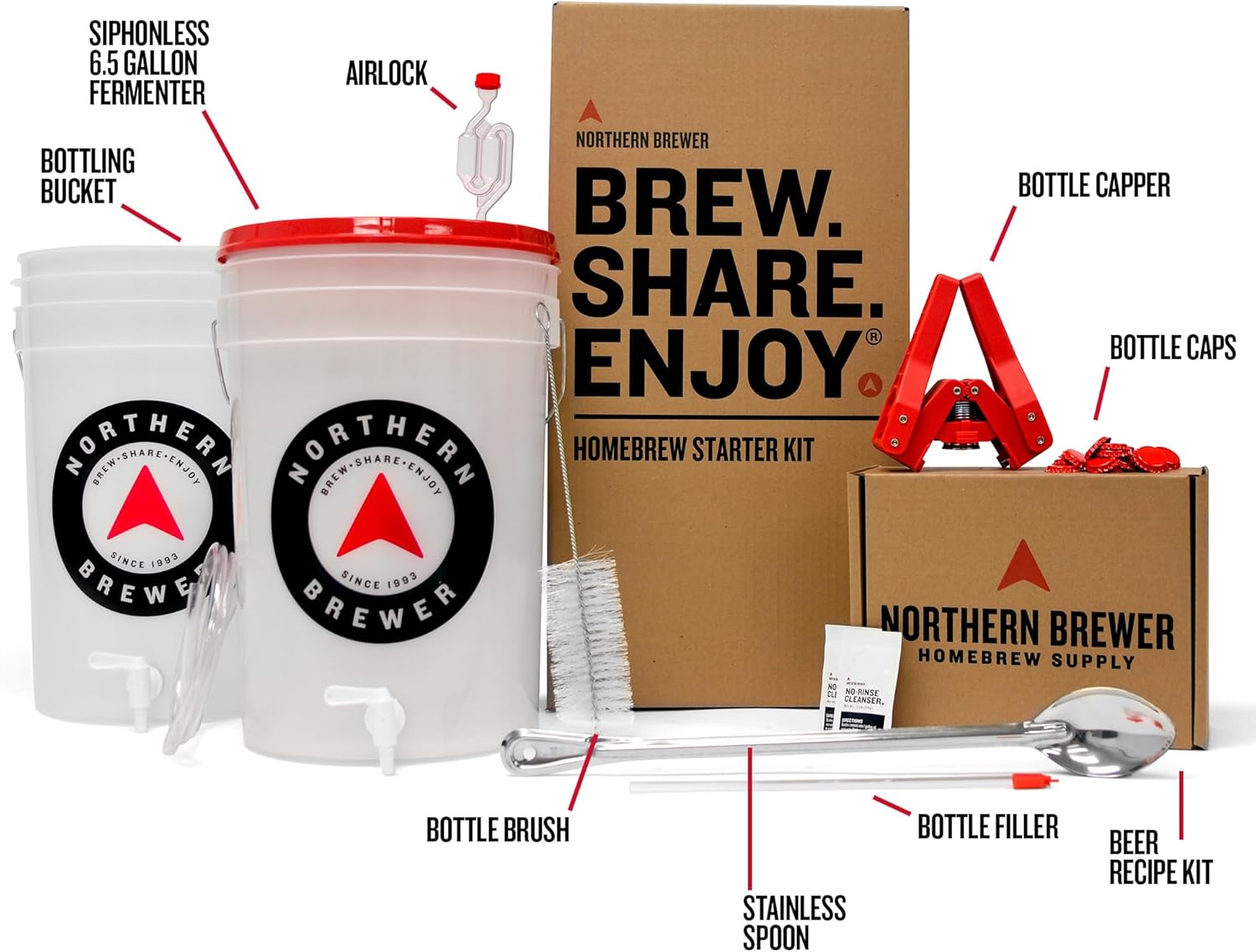
Homebrewing is the craft of making beer at home from scratch — combining malted grain (or pre-made malt extract, a concentrated syrup that shortens the process), hops (the flowers that add bitterness and aroma), water, and yeast (the living organism that converts sugar into alcohol and CO₂). Your first batch can be as simple as a 30-minute boil on a kitchen stove. The problem isn’t the process — it’s that the starter kit market is genuinely noisy. Discount bundles on Amazon bundle together mismatched plastic that will frustrate you before your first batch finishes fermenting, while serious equipment suppliers sell properly integrated kits that set you up to actually progress. This guide synthesizes what experienced brewers, equipment reviewers, and published brewing resources consistently say about where first-timers go wrong and what a kit actually needs to include — so you spend your money once, on the right things.
Why “Budget Kit” Is Often a False Economy
The sticker price of a $35 Amazon starter bundle looks appealing right up until the moment you realize the hydrometer (a glass instrument for measuring your beer’s sugar content, used to calculate alcohol by volume) arrived cracked, the auto-siphon leaks mid-transfer, and the plastic fermenting bucket is scratched so badly that bacteria can hide in the grooves between batches.
The American Homebrewers Association’s getting-started resources are explicit on this point: sanitation is the single biggest variable in early-batch success, and scratched or porous plastic is a sanitation liability. Cheap kits default to the thinnest-gauge buckets to hit a price point, and those buckets tend to show scratches after the first aggressive scrub.
The pattern that veteran brewers report, documented across MoreBeer’s buyer guides and echoed in Brew Your Own magazine’s beginner-kit roundups, is a predictable upgrade cycle: buy the $40 kit, struggle with leaking equipment, brew one or two mediocre batches, then spend $150–$200 on replacement parts anyway. The math usually closes in favor of spending $100–$150 the first time.
By the numbers: the real cost of the cheap-kit upgrade cycle
| Path | Year-1 spend | Headaches |
|---|---|---|
| $40 Amazon bundle → partial replacement | ~$160–$185 | High — mid-batch equipment failures |
| $110–$150 quality extract kit from a homebrew supplier | ~$110–$150 | Low — purpose-built components |
| $200–$250 all-grain starter kit (5-gal) | ~$200–$250 | Low — room to grow |
What a Starter Kit Actually Needs to Include
Think of a brewing kit as having three functional layers: the boil layer (getting your wort — unfermented beer — made), the fermentation layer (where yeast does its work), and the transfer and measurement layer (moving liquid safely and knowing where you are in the process). A kit that’s missing any of these layers forces an immediate supplemental purchase.
The Boil Layer
For extract brewing (the most common starting method, where you add concentrated malt extract to water rather than mashing whole grain), a 5-gallon stainless steel kettle is the minimum viable boil vessel. John Palmer’s How to Brew, the most widely cited beginner reference in the craft, recommends a kettle with at least a 3-gallon capacity for partial-boil extract batches, and 5+ gallons if you want to do full boils — which produce cleaner, better-colored beer. Stainless steel is the correct material here; aluminum works but reacts differently with acidic wort and is harder to clean long-term.
Kits that ship with a 2-gallon aluminum stockpot are already constraining your process before you’ve started.
The Fermentation Layer
This is where beginner kits diverge most sharply. Your options at the entry level are:
Plastic fermentation bucket (6.5 gal): Inexpensive, lightweight, easy to find. The legitimate concern, noted in Palmer’s How to Brew and repeated in MoreBeer’s equipment articles, is that plastic scratches — and scratches harbor microbes that cause off-flavors. The answer is to treat plastic buckets as consumables and replace them every 12–18 months, or after any visible scratching.
Glass carboy (5–6 gal): Scratch-resistant and easy to inspect visually (you can see your fermentation in progress), but heavy when full (a 5-gallon glass carboy with beer weighs roughly 50 lbs), and catastrophically dangerous if dropped. The brewing community has largely shifted toward better alternatives.
Better Bottle or PET plastic carboy: Same visual clarity as glass without the breakage risk. Owners consistently report these as the practical sweet spot for extract brewers who aren’t ready to invest in a conical fermenter.
Conical fermenters (e.g., Anvil Crucible, FastFerment): The entry-level conicals in the $80–$150 range offer a dump valve for removing trub (the sediment that settles during fermentation) and yeast without transferring the whole batch. Brulosophy’s experiment archive and Brew Your Own’s gear reviews both point to reduced oxygen exposure and cleaner yeast management as the primary benefits — meaningful for anyone who plans to brew more than a handful of batches.
Our read of the aggregated owner feedback: if you’re certain you’ll brew regularly, spend the extra $40–$60 and start with a Better Bottle or entry conical. If you’re genuinely unsure whether this is a lasting hobby, a quality plastic bucket from a reputable homebrew supplier (Northern Brewer, MoreBeer, Austin Homebrew Supply) is a defensible choice — just don’t buy the $8 hardware-store version.
The Transfer and Measurement Layer
Auto-siphon: A spring-loaded siphon that starts liquid flow without mouth contact (which would introduce bacteria). This is non-negotiable — the manual siphon tubes in discount kits are both unhygienic and frustrating.
Hydrometer or refractometer: You need one of these to measure original gravity (OG — the sugar content of your wort before fermentation) and final gravity (FG — after fermentation), which together tell you alcohol by volume and whether fermentation has completed. A basic hydrometer runs $8–$12. A refractometer is faster to use and requires only a few drops of liquid rather than a sample tube, though it requires a correction formula for post-fermentation readings. Either works for a beginner.
Bottle capper and bottles (or a kegging setup): The MoreBeer buyer guides note this is the most commonly overlooked kit component. Capping bottles is straightforward; the wing-style capper in most starter kits is functional if not elegant. If you’re already thinking about kegging — connecting a 5-gallon Corny keg (short for Cornelius keg, a torpedo-shaped stainless canister originally used by the soda industry) to a CO₂ tank and dispensing draft beer at home — that’s a separate investment of $200–$400 and a very reasonable next step, but it doesn’t belong in a first-kit budget.
Extract vs. All-Grain: Setting Expectations on the First Kit
Extract brewing (using pre-made malt extract) and all-grain brewing (converting whole malted grain yourself in a process called mashing — soaking crushed grain in hot water to convert starches to fermentable sugars) are different processes requiring different equipment.
The Homebrew Supply section of Brew Your Own magazine, along with Palmer’s How to Brew, both recommend extract as the on-ramp: fewer variables, less equipment, and beer that is genuinely good when executed well. Brulosophy’s experiment archive has documented multiple blind triangle tests in which experienced brewers couldn’t reliably distinguish extract beers from all-grain equivalents, particularly in hop-forward styles where malt complexity is less dominant.
All-grain kits (which add a mash tun — a cooler or vessel for steeping grain — and typically a larger boil kettle) start around $150–$200 for entry setups and scale to $500+ for all-in-one electric systems like the Anvil Foundry 10.5 or Grainfather G30. These systems are legitimate and deserve their own buying guide, but they’re not a first-kit purchase for most brewers — they’re a year-two decision after you know you love the process and want more control over your malt bill (the recipe’s grain selection).
The honest decision frame:
- If you want to brew your first batch within 48 hours of receiving your kit, extract is correct.
- If you’re already certain you’ll go all-grain and want to buy once, a quality 5-gallon all-grain starter kit from a reputable supplier is defensible — but expect a steeper learning curve on batch one.
- If someone is gifting you a kit, ask for an extract kit from a specialty homebrew retailer, not a general merchandise platform.
Where to Buy Actually Matters
The quality gap between homebrew specialty retailers and general marketplace sellers is real and documented. MoreBeer’s articles on equipment sourcing note that specialty retailers pre-verify component compatibility, often test-pack kits to prevent transit damage, and staff customer service lines with people who have actually brewed. That last point matters when you’re 45 minutes into your first brew day and something looks wrong.
Reputable online retailers as of mid-2026 include MoreBeer, Northern Brewer, Austin Homebrew Supply, and Williams Brewing. All stock kits across the $80–$250 range with clearly itemized component lists — which is itself a quality signal. If a kit listing doesn’t tell you the gauge of the kettle, the volume of the fermenter, or what style of airlock is included, that’s a flag.
The “If X, Then Y” Decision Grid
Here’s the synthesis. Match yourself to the row that fits, and you have your kit decision.
If you’re buying your first kit and budget is the main constraint: Spend $100–$130 at a homebrew specialty retailer on a 5-gallon extract kit with a stainless kettle, quality plastic bucket fermenter, auto-siphon, and basic measurement tools. Avoid general marketplace bundles under $60.
If you know you’ll brew 10+ batches and want to skip the upgrade cycle: Spend $150–$200 on an extract kit that includes a Better Bottle or entry-level conical fermenter. The fermentation vessel is where the money matters most.
If you’re already thinking all-grain: Either buy a quality all-grain starter kit with a mash tun ($175–$225) and accept the learning curve, or start with extract for two batches to build process intuition, then upgrade.
If this is a gift for someone else: Buy a gift card from a homebrew specialty retailer rather than a pre-assembled kit. Let the brewer choose their own fermenter type and kettle size. The brewing community broadly agrees on this: the wrong gift kit creates barriers; the right equipment, chosen by the person who’ll use it, creates a brewer.
Your first batch will have variables you can’t fully control — water chemistry, ambient temperature during fermentation, yeast handling. Your equipment shouldn’t be one of them. Buy the gear that gets out of your way and lets the beer be the variable worth optimizing.