April 29, 2026 • Callum Draper • 9 min reading time • Prices verified June 6, 2026
Mini Kegs and Growler Tap Systems: Serving Homebrew Without Building a Full Keezer
If you’ve ever bottled a batch of homebrew, you already know the Saturday afternoon math: 48 bottles, two rounds of sanitizing, capper in hand, back aching by bottle 30. Kegging is the escape hatch — instead of individual bottles, you transfer your finished beer into a pressurized metal vessel (a keg), push it with CO₂ gas (carbon dioxide, the same gas that makes soda fizzy), and pour directly from a tap. The full version of that setup — a chest freezer converted into a multi-tap draft tower, called a keezer — is a legitimate brewery room centerpiece, but it’s also a $600–$1,200 project before you pour your first pint. Mini kegs and pressurized growler tap systems are the middle path: you get cold, carbonated draft homebrew, served through a real tap, without the freezer conversion, the temperature controller, or the dedicated floor space. This guide breaks down exactly how those systems work, what they cost, and which one fits where you are in your brewing life.
What You’re Actually Choosing Between
The “mini keg / growler tap” category covers three meaningfully different product types that get lumped together in search results. Getting the distinction right before you spend money saves a return-shipping headache.
1. Pressurized Mini Kegs (2L–5L, Party-Tap Style)
These are the squat barrel-shaped vessels — think the Heineken DraughtKeg form factor, but designed for homebrew. Volumes run 2 liters (roughly a six-pack equivalent) up to 5 liters (about 1.3 gallons, or 10–11 twelve-ounce pours). Most use a small integrated or clip-on CO₂ cartridge — usually 16g or 33g threaded cartridges — to maintain pressure and push beer through a short plastic tap. The Fizzics DraftPour and similar devices sit in this zone, though they use nitrogen micro-bubbles rather than CO₂ pressure and are designed for cans rather than homebrew fill.
For actual homebrew use, the Fermentasaurus Snub Nose, the iKegger 2L/5L stainless mini keg, and the Tapcooler counter-pressure fill system accessories are the names that come up consistently in owner discussions. The appeal is portability: take a 2L to a friend’s cookout, serve it with zero setup beyond cracking the CO₂ cartridge, and leave without worrying about your hardware.
The tradeoff is CO₂ cartridge cost and short hold time. Owners across aggregated reviews consistently note that once a 16g cartridge is punctured, you’re on the clock — most find the beer stays well-carbonated for 3–5 days under the remaining pressure, but a 5L keg you don’t finish quickly can go flat before you drain it if the seal isn’t perfect.
2. Pressurized Growler Systems (64 oz / Half-Gallon, Ball-Lock or Pin-Lock Compatible)
The GrowlerWerks uKeg (64 oz and 128 oz versions) and similar vacuum-insulated, pressurized stainless growlers represent a more serious step up. These use a small integrated regulator to dial in and hold a specific CO₂ pressure — the uKeg’s integrated CO₂ regulator is what separates it from a dumb stainless growler. Per GrowlerWerks’ published specs, the 64 oz uKeg uses 16g CO₂ cartridges and the regulator holds pressure between pours, which owners report extends viable serving life to 2–3 weeks compared to days for the non-regulated mini keg style.
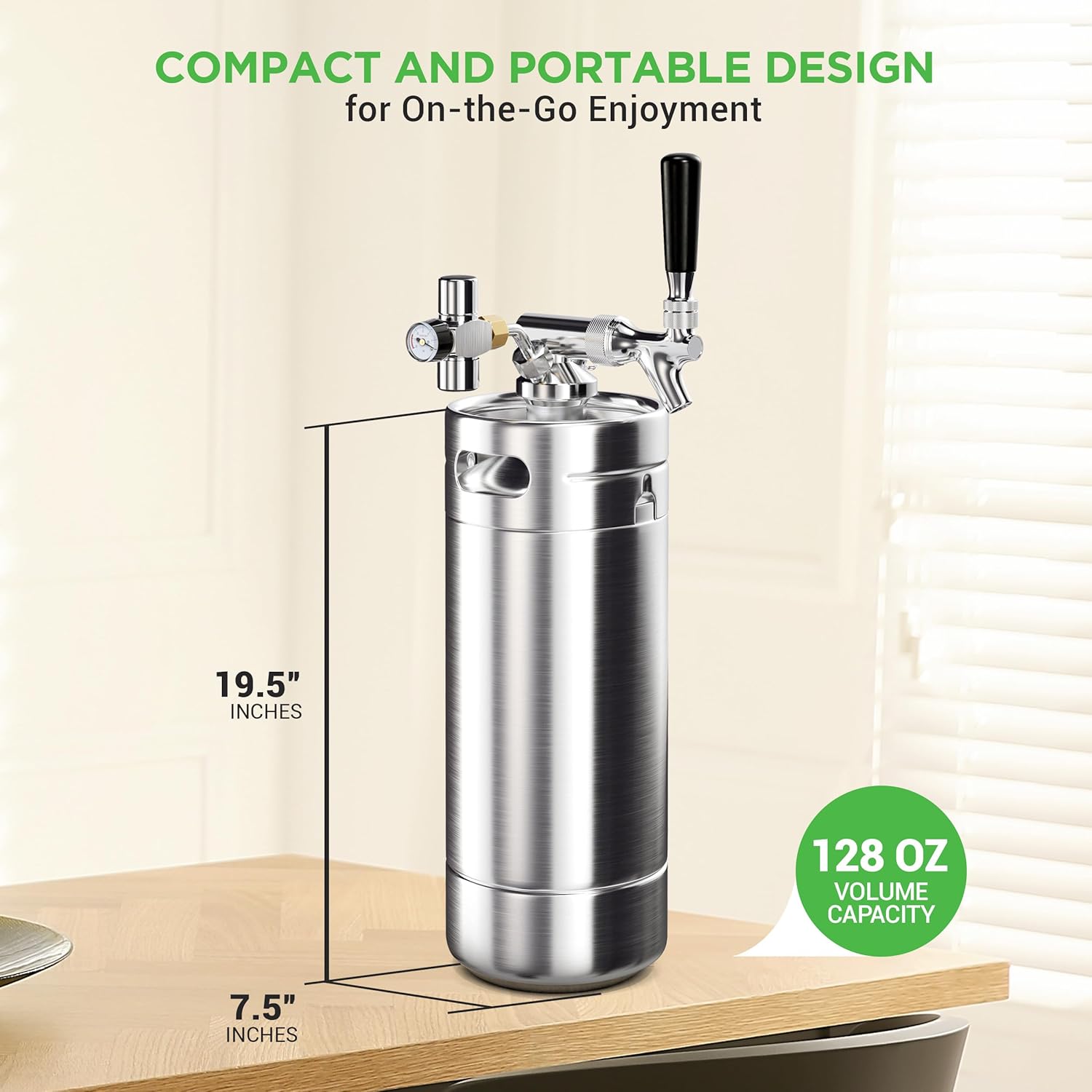
The 128 oz (1 gallon) uKeg Pro moves closer to a proper small keg — it takes 74g CO₂ cartridges and reviewers at Craft Beer & Brewing note it’s the format that makes sense for club meetings or a long weekend camping trip where you want genuine draft convenience.
Fill method matters here: these growlers are best filled via counter-pressure filling (purging with CO₂ before filling from a serving keg) to minimize oxidation. The Homebrewers Association’s packaging guidance explicitly flags oxygen pickup during growler fill as the primary cause of premature flavor degradation — a warm fill from a picnic tap isn’t the same as a counter-pressure fill.
3. Mini Cornelius (“Corny”) Keg Systems — The Real Bridge
The 1.75-gallon Torpedo Keg (sold by MoreBeer and others) and similar small-format ball-lock kegs use the exact same connectors as full 5-gallon Cornelius kegs — the workhorse of the homebrewing draft world. This is the format that sits between “pressurized growler toy” and “I need a dedicated keezer,” and it’s the one most intermediate brewers underestimate.
With a 1.75-gallon ball-lock keg, a 2.5 lb CO₂ cylinder (small enough for a picnic cooler), a mini regulator, and a cobra tap or picnic tap, you have a functional draft system for roughly 14–15 twelve-ounce pours per fill. Brew Your Own Magazine’s kegging guide consistently recommends the small Corny keg path as the entry point for brewers who want proper serving pressure control without the freezer build.
By the Numbers
| Format | Volume | Approx. Pours (12 oz) | CO₂ Source | Typical Street Price (2026) |
|---|---|---|---|---|
| iKegger 2L mini keg | 2L | ~5–6 | 16g cartridge | $45–$65 |
| GrowlerWerks uKeg 64 oz | 64 oz | ~5–6 | 16g cartridge | $100–$130 |
| GrowlerWerks uKeg 128 oz Pro | 128 oz | ~10–11 | 74g cartridge | $160–$200 |
| 1.75-gal Torpedo / small Corny keg + picnic tap setup | ~224 oz | ~14–15 | 2.5 lb cylinder | $120–$180 complete |
Prices reflect aggregated retailer listings as of May 2026. CO₂ cartridge cost adds $1.50–$4 per 16g unit depending on quantity purchased.
The Real Cost Tradeoff: Cartridges vs. Cylinder
This is the math that most mini keg marketing quietly skips. A 16g CO₂ cartridge costs roughly $1.50–$3.00 each when bought in bulk; single-pack retail pricing runs $4–$6. To serve a 5-liter (169 oz) mini keg, owners report using 1–2 cartridges depending on seal quality and how aggressively they top-pressure between pours. Call it $3–$6 per 5-liter keg in CO₂ cartridge cost.
A 2.5 lb CO₂ cylinder holds approximately 1,134g of CO₂. At roughly 5–8g of CO₂ per 5-gallon keg for serving (numbers vary by carbonation level and temperature per MoreBeer’s dispensing guides), that same cylinder serves dozens of full kegs before a refill — and a 2.5 lb refill typically costs $15–$25 at a welding supply or homebrew shop.
The crossover point: if you’re filling a mini keg more than twice a month, the cylinder path pays for itself within a few months even before you account for the convenience of not hunting down cartridge refills. The cartridge-based systems earn their keep for portability, gifts, or genuine occasional use — not as a permanent serving solution for an active brewer.
Craft Beer & Brewing’s serving systems overview makes this point directly: cartridge-based mini kegs are optimized for transport and short-event use, while cylinder-fed small Corny setups are optimized for home serving frequency.
Carbonation: Force-Carbonating vs. Natural Carbonation in Small Formats
There’s a workflow decision embedded here that shapes which system fits your process.
Force carbonation means you transfer fully fermented, flat beer into the keg, connect CO₂, set a pressure (typically 10–14 PSI at 38°F for most styles — higher for lagers, lower for cask-adjacent styles), and let it absorb over 24–72 hours. This gives you precise, repeatable carbonation levels and doesn’t require any priming sugar math. It’s the default for anyone already kegging.
Natural carbonation (priming sugar in the keg or growler) works in small-format vessels but introduces risk: if the vessel isn’t rated for the pressure that active fermentation can generate, you have a problem. The GrowlerWerks uKeg is not designed for natural carbonation — the integrated regulator vents excess pressure, which means your naturally carbonated beer can lose CO₂ before it fully conditions. For natural carbonation in a small vessel, you want a full ball-lock keg with a known pressure rating.
The Homebrewers Association’s packaging documentation flags this plainly: pressurized growler-style vessels with relief valves are serving vessels, not conditioning vessels. Plan to force-carbonate in a proper keg first, then transfer — or use counter-pressure filling equipment.
Serving Temperature Without a Keezer
This is the friction point that the marketing glosses over. A keezer solves serving temperature passively — your beer lives at 36–40°F all the time. Mini keg and growler tap systems require you to bring the vessel to temperature before serving and keep it there during service.
Practical owner solutions, drawn from aggregated reviews and forum documentation:
- Insulated growler systems (the uKeg stainless double-wall construction) buy you 4–6 hours of cold hold from refrigerator-cold starting temperature, per GrowlerWerks’ published specs. That’s enough for a backyard session but not a multi-day setup.
- A full-size fridge with a picnic tap line running through a cracked door or drilled port is the budget workaround for small Corny keg setups. Ugly but effective — your keg stays cold, the tap is accessible, and you avoid the freezer conversion entirely.
- A dedicated mini fridge with the keg inside and the tap line through a drilled hole is the next cleaner step — essentially a single-tap keezer without the freezer element. This path runs $100–$200 in fridge cost (used) plus your small keg hardware.
If X, Then Y: The Decision Framework
If you want draft homebrew for cookouts, camping, or gifts — and you brew less than once a month: The 2L–5L cartridge-based mini keg (iKegger stainless or similar) is the right call. Keep your expectations calibrated to 3–5-day serving windows and carry backup cartridges.
If you want a pressurized, regulated vessel for weekend events and you value the premium build: The GrowlerWerks uKeg 128 oz Pro is the most consistently praised option in its category across Craft Beer & Brewing’s coverage. The integrated regulator justifies the price premium over dumb growlers.
If you’re an active brewer (2+ batches per month) and you don’t want to build a full keezer yet: The 1.75-gallon small Corny keg with a 2.5 lb CO₂ cylinder, mini regulator, and a dedicated mini fridge is the right answer. It uses the same connectors as a full 5-gallon system, so every dollar you spend scales forward when you eventually do build the keezer. Brew Your Own’s kegging guide calls this the logical first step toward a full draft system — not a workaround but a genuine on-ramp.
If you’re already kegging into 5-gallon Corny kegs: A mini keg or growler tap is an accessory, not a system — use it for portability and event serving, not as your primary solution.
The keezer build will probably happen eventually if you’re serious about the hobby. But “eventually” doesn’t mean today, and in the meantime, cold homebrew from a real tap beats wrestling a bottle capper every single time.